Marquette, MI · Garage Door Service
Broken or frayed garage door cables on Marquette's 1960s-70s housing stock, explained: why cold winters and original hardware make this a common call across the area.
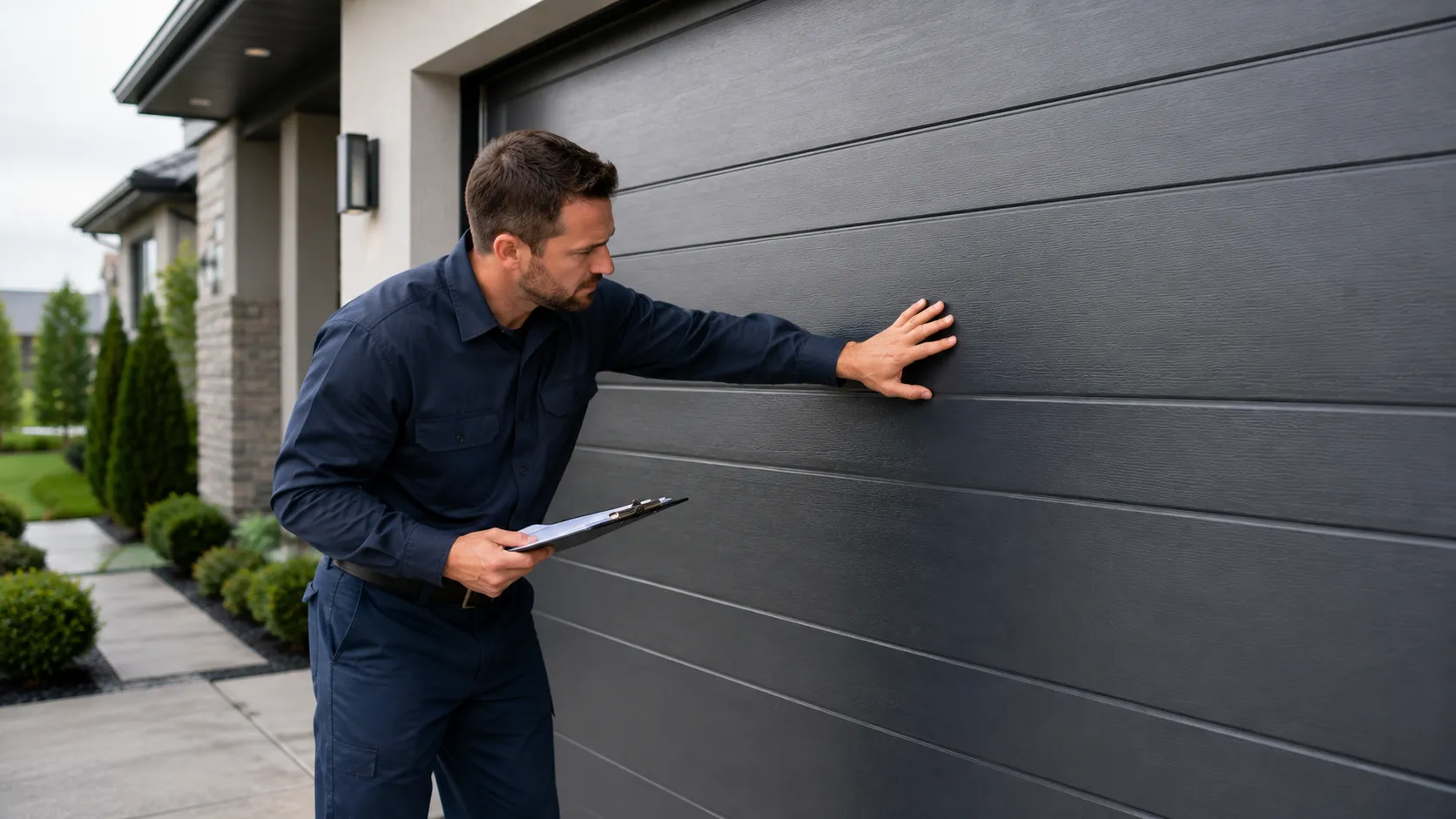
A garage door cable repair almost always means one of two things: a frayed or snapped lift cable, or a cable that's jumped its drum or pulley and bound up the door mid-track. On a torsion system, which is what most doors here run, the cables wind onto drums at each end of the spring shaft and take the full weight of the door as it travels. When one cable fails, the door drops unevenly, often jamming hard against the track or coming off the rollers on one side.
The repair itself is straightforward for a trained hand: release the spring tension safely, pull the old cable, measure and cut new galvanized aircraft cable to the drum spec, re-seat it, and rebalance the door so both sides travel evenly. What makes it not a weekend project is the spring tension - a torsion spring under load can do real damage if it's handled wrong, which is the main reason this isn't a swap-the-part job.
We also check the drums, end bearing plates, and the opposite cable while we're in there, since a cable that snapped from age usually has a twin on the other side that's close behind it. Replacing one and leaving the other is a callback waiting to happen.
Most homeowners notice it as a bang, then a door that won't move, or moves crooked. Sometimes it's quieter: the door starts sagging on one side over a few weeks, rollers grinding against the track edge, before the cable finally lets go. If the opener keeps running but the door doesn't lift, or only lifts a few inches before the motor strains, a cable or its drum is the usual suspect - not the opener.
On double-wide doors, which are common on the ranch and split-level houses built across this area from the 1940s through the 1980s, the failure is more dramatic because there's more door weight riding on each cable. A snapped cable on a 16-foot door can drop that whole panel section hard and fast, which is why we tell people not to force the door manually once it's hung up - stand clear and call rather than crank on it.
The housing stock across the Marquette service area was built mostly between 1941 and 1988, with a median build year around 1971, and that 1960s-70s wave of construction shows up in ten distinct named neighborhoods we work in regularly. Doors and hardware from that era were built to the standards of the time, which means a lot of original or first-generation replacement cable is still on doors that are 50 to 60 years old - well past the service life of galvanized lift cable, which corrodes and fatigues from the inside out long before it looks bad from outside.
Add the climate. This area sits in a severe cold band, and cold does two things to cable: it stiffens the galvanized strands so they're less forgiving of the daily flex from opening and closing, and it accelerates fatigue at the crimped end fittings where the cable clamps to the drum. A cable that might last another few seasons in a mild climate reaches its breaking point here sooner, especially on doors that see daily use through winter when the door is heavier with cold-stiffened weatherstripping and sometimes packed snow at the bottom panel.
We see this pattern across the service area - not just in one neighborhood, but wherever that 1960s-70s housing wave sits.
We'll be straight about this one: don't do your own cable repair if the door is still under spring tension. A wound torsion spring stores enough force to break bones, and there's no safe workaround for that using YouTube and a socket wrench. If the cable has already fully released and the door is down with no tension on the system, some owners can safely inspect for obvious damage - but re-cabling and rebalancing still needs the right winding bars and drum spec, which most homeowners don't have on hand and shouldn't buy for a once-in-a-decade job.
Where DIY does make sense: keeping an eye on things. Look at your cables twice a year, especially before winter, for rust bloom, kinks, or strands starting to separate near the drum end. That's a five-minute look that costs nothing and can catch a fraying cable before it snaps and drops the door. If you see fraying, that's the point to call, not the point to wait and see.
We don't have a fixed number to publish here since it depends on door size, whether one or both cables need replacing, and drum condition - but we can give you a firm quote over the phone once we know your door's size and setup.
Yes. If the opener keeps trying to lift a door that's jammed on a snapped cable, the motor strains against dead weight, which can burn out the drive gear or motor over time. Once a cable breaks, disconnect the opener and don't run it until the cable's replaced.
Cold stiffens galvanized cable strands and speeds up fatigue at the crimped end fittings, and this area sits in a severe cold climate band. Combine that with a heavier door from cold-stiffened seals or packed snow, and winter is when a cable close to the end of its life usually gives out.
It's common enough that we check both whenever one fails. Cables installed together age together, especially on original hardware from the 1960s-70s housing wave common across this area, so if one side snapped from age, the other side is often close behind.
By Neighborhood
We also handle cable repair in these Marquette-area suburbs.
Call now or request a free quote - same-day service on most repairs, upfront written pricing.