Marquette, MI · Garage Door Service
Harvey homes run newer than most of the Marquette service area, built mostly in the 1970s. That changes what breaks and how a torsion spring fails on a cold night.
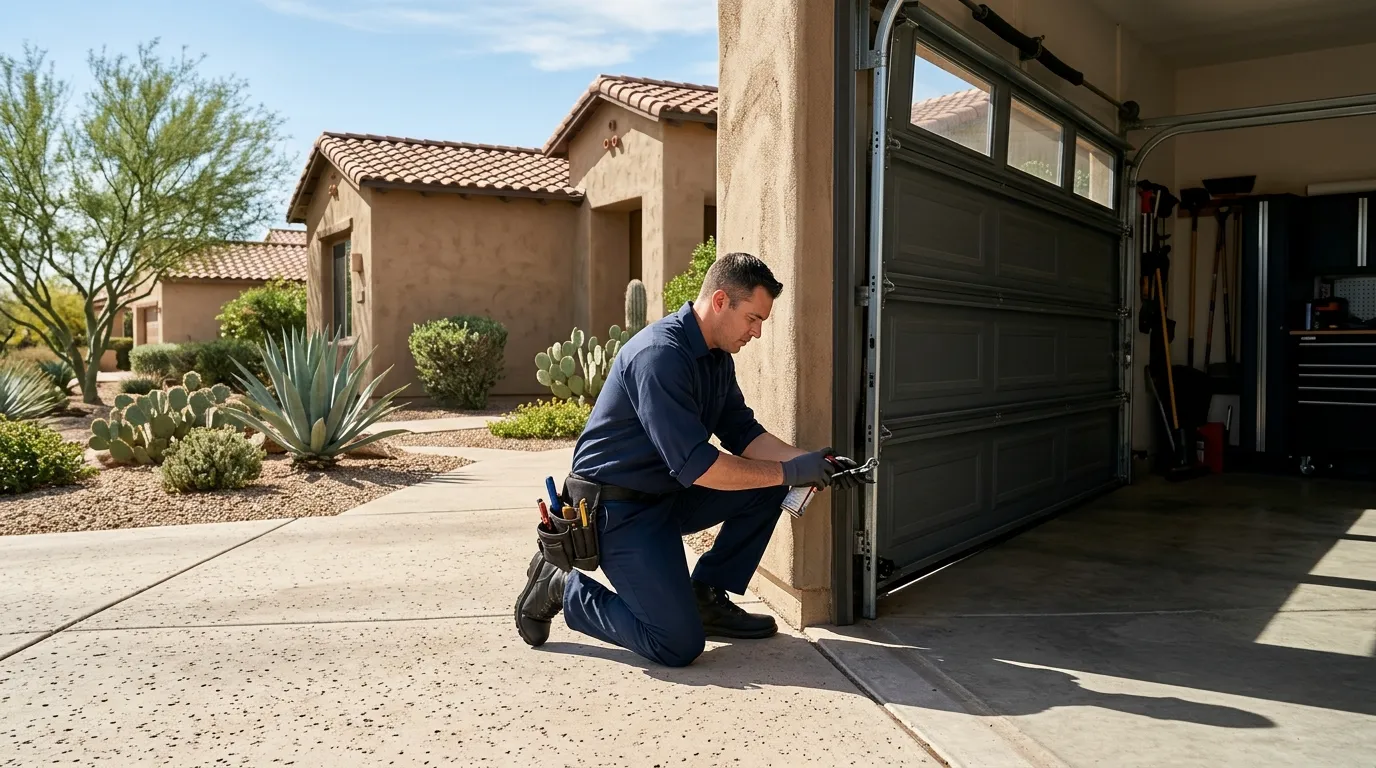
Harvey is a small piece of the map, about 1,321 households, which is why a single truck out of Marquette can cover it without the town needing its own crew. That size also means the failures we see here repeat: this isn't a town with ten different eras of housing stock stacked on top of each other. Most of the service area was built between 1941 and 1988 with a median year of 1971, but Harvey itself sits closer to 1977 - a decade newer than a lot of what's five miles up the road in Marquette. That gap matters. Houses from the late 1970s were more likely to get factory torsion springs and steel doors instead of the older wood-panel, side-mounted setups you still find in the 1960s pockets of the wider area. The failure mode shifts too: fewer cases of rotted wood panels dragging on a track, more cases of a torsion spring that's simply aged out after forty-plus winters of temperature swings. Cold-climate stress on steel torsion springs is real here - this is a severe cold band, and a spring that's been cycling through freeze-thaw for decades is a spring on borrowed time, not a slow leak you can put off.
On a 1977-built door, the two things that fail hardest and fastest are the torsion spring and the extension cables, both worn down by the same cold that made this a severe-climate zone. A spring that snaps at 10 degrees doesn't ease into failure - it lets go, and the door either won't budge or comes down hard. Rollers on original steel tracks get brittle in the cold and start binding, which you'll feel as a door that jerks instead of glides. Openers from that era, if they're original, often lack modern safety reversal, so a door that's fighting a bent track can slam instead of stopping. None of this is Harvey-specific hardware you can't get - it's common gear for the year, and that's actually good news for repair speed once we're on site.
We run out of Marquette, and Harvey sits about 5 miles out, so a call here isn't a special trip - it's a normal one on the route. Tell us the door's rough age and whether it's moving at all, even a little; that tells us whether to bring spring stock sized for a 1970s-era door or something newer. We don't keep a branch in Harvey and we're not going to pretend otherwise - the truck comes from Marquette every time, which is worth knowing if you're calling at an odd hour and wondering why we ask where you are before anything else.
We don't have a posted price list for this page, and quoting a number without seeing the door and spring size would be a guess dressed up as a fact - so we won't. What we can say: Harvey's median household income runs around $75,188, noticeably higher than the roughly $68,262 median across the wider service area, and that's relevant mainly because it tends to mean doors here got maintained rather than run into the ground before anyone called anyone. A well-kept door usually means a smaller repair bill, not because we charge less in Harvey, but because less has gone wrong by the time we get there.
This is the one honest limitation worth saying plainly: how long you're stuck depends on whether the part is common. A torsion spring sized for a standard 1970s steel door is stock - we carry those, and the fix happens the same visit. A part specific to an older wood door, or something nonstandard that got installed in a renovation, might mean a return trip once it's ordered. We won't promise a same-day fix on a door we haven't seen; what we can tell you is that a 5-mile drive from Marquette isn't the bottleneck - parts are, or they aren't, and we'll tell you which within a few minutes of looking at the spring and track.
Harvey is covered - the truck comes from Marquette, about 5 miles away, and it's a normal stop, not a special-case trip. There's no separate depot here; the crew and stock travel from Marquette every time a call comes in.
Because the part depends on it. A door built when Harvey's housing stock was going up, mostly the 1970s, usually runs standard torsion spring hardware we stock on the truck. Older wood-panel doors from the wider area's 1940s-60s stock sometimes need a part ordered in, which changes the timeline.
It's real. This area sits in a severe cold climate band, and steel torsion springs lose tension and get brittle faster through repeated freeze-thaw cycles. A spring that's been through forty winters is closer to failure than the same-age spring somewhere milder - that's physics, not a pitch.
Call now or request a free quote - same-day service on most repairs, upfront written pricing.