Marquette, MI · Garage Door Service
Harvey homes went up mostly around 1977, later than much of the Marquette area, which changes what fits in the opening and what an install actually costs here.
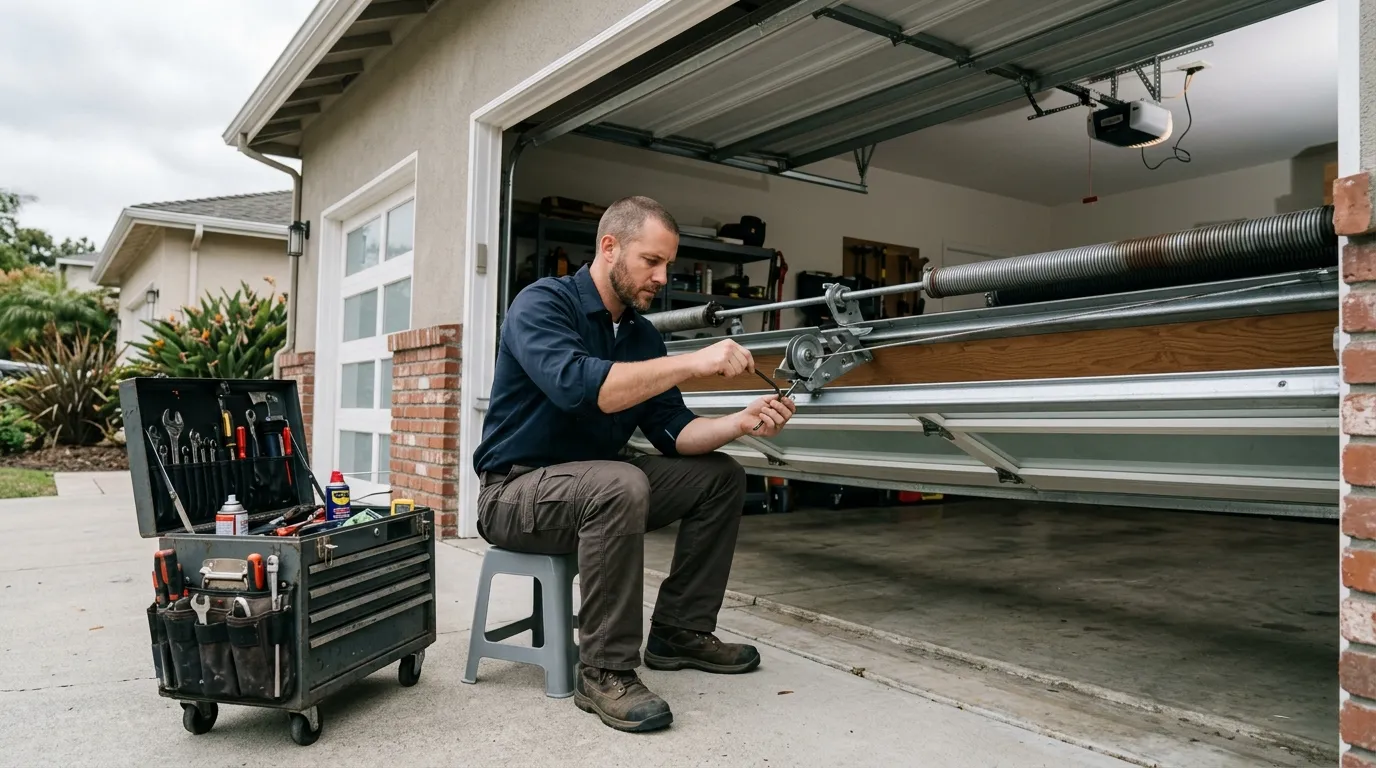
Most garages in Harvey went up around 1977, a decade or so newer than the older stock closer to Marquette. That matters because the openings poured in the 1970s tend to run a touch wider and taller than the 1950s and 60s garages nearby, built to fit the two-car layouts that became standard by then. The original doors were single-layer steel, no insulation, hung on the light-gauge track that was normal for the era. Thirty-plus winters of that track flexing under a steel door in a cold climate is what actually fails first - not the panels, the track brackets and the hinges holding them. When a Harvey homeowner calls about a door that binds or drops crooked, it's almost always that 1970s track working loose from the jamb, not a panel problem. An install here has to account for what that original opening was built to, and whether the framing can take a heavier insulated door without new jamb work. That's a different question than it is on an older or newer street, and it's the first thing we look at before quoting anything.
A 1977-era opening built for a bare steel door doesn't automatically accept a modern insulated one. Insulated sections weigh more, and if the original jambs and header were sized tight for a lighter door, you can end up needing reinforcement before the new door ever gets hung. Cold-climate service also means the bottom seal and the weatherstrip channel matter more here than in a mild climate - a door that seals badly in a severe-cold band loses heat fast and the seal itself cracks sooner. We've seen jobs where the opening measured fine on paper but the header had sagged over the decades, which only shows up once the old door is off the track. That's the honest limitation: we can quote off measurements and photos, but a firm price on some of these older openings waits until the door is down and we can see the header and jambs directly.
We run installs in Harvey out of Marquette, about 5 miles up the road, so a visit gets scheduled rather than dispatched same-hour. Tell us the door size, whether it's a single or double opening, and roughly when the current door was put in if you know it - that plus a couple of photos of the track and header lets us bring the right hardware the first trip instead of guessing at what a 1977 opening needs. If you're not sure whether you're looking at a repair or a full replacement, our Harvey garage door repair page covers the fault side of things; this page is about swapping the door itself.
We don't have a published price list to hand you here, and giving a number without seeing the opening would be a guess dressed up as a quote. What we can tell you is what drives the cost on a Harvey job specifically: whether the 1970s jamb needs reinforcing to carry an insulated door, whether the track has to be replaced outright versus reused, and the door size itself. Harvey's median household income sits higher than the surrounding service area, and we mention that only because it shapes what doors homeowners here typically ask for - more of the insulated, higher cycle-count openers than the base steel door - not because it changes our price. Ask for a written number after the walk-through, not before.
Because the crew travels from Marquette rather than sitting in Harvey, the door comes off and the new one goes up in the same visit - we don't leave an opening exposed overnight in a severe-cold climate band if we can avoid it. The one thing that can push a job to a second visit is exactly the header or jamb reinforcement mentioned above: if the original 1977 framing won't take the new door's weight without extra bracing, we bring that bracing back on the next trip rather than delay the whole household waiting on lumber we didn't know we'd need.
Most were, but not all. Harvey's housing mostly dates to around 1977, and openings from that period usually run to the two-car standard, wider than the 1950s stock closer to Marquette. We still measure every job - some builders varied the header height even within the same subdivision year.
No. We're based in Marquette and drive out to Harvey, about 5 miles, for installs and repairs. There's no local depot, so visits are scheduled rather than same-hour dispatch.
We can give a rough range based on door size and photos, but a firm number waits until we've seen the jamb and header in person. Some 1970s framing needs reinforcement before an insulated door goes in, and that only shows up once the old door is down.
Yes, more than in a milder climate. Harvey sits in a severe-cold band, and the biggest heat loss on an old single-layer door is usually the panel itself plus a worn bottom seal - both of which an insulated replacement addresses directly.
Call now or request a free quote - same-day service on most repairs, upfront written pricing.