Marquette, MI · Garage Door Service
Ishpeming homes built around 1973 carry original torsion hardware that's aging out. We drive out from Marquette to fix springs, cables, and openers built for a different era.
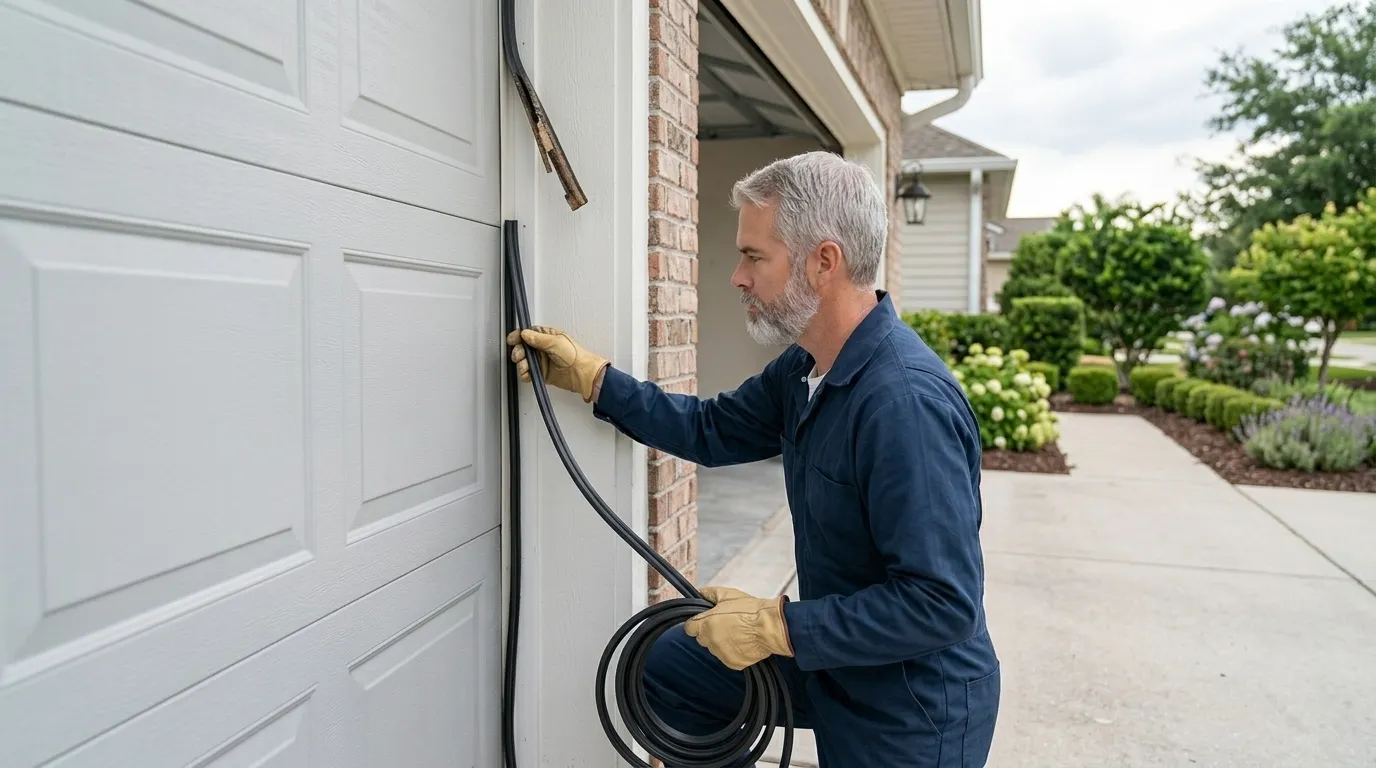
Most of the trucks running out of Marquette carry torsion springs sized for doors built between the late 1960s and early 1980s, since that's what a house in Ishpeming is likely to have hanging over the driveway. Median build year here lands around 1973, which puts the original door and hardware at close to fifty years old on a lot of these homes. That means standard torsion springs, steel rollers, and single-point cable setups - not the newer flat-panel doors with dual openers you'd find on something built in the last fifteen years. What we don't carry on the truck is anything for a door already converted to a specialty size or an odd import, and if that's the case here, expect a return trip once the part is ordered. For the common stuff - springs, cables, rollers, standard openers - we're set up to close out the job same visit.
A door that's had one owner and one spring for fifty winters doesn't fail quietly. The pattern we see on these older Ishpeming doors is a spring that's lost tension gradually - the door gets heavier to lift by hand, the opener starts straining and grinding, and then one cold morning a cable snaps or the spring itself lets go with a bang. Cold matters here. This is a severe cold-climate area, and steel that's been cycling through freeze-thaw for five decades gets brittle at the coil ends first. If your door has started groaning before it moves, or the opener chain jerks instead of pulling smooth, that's the wind-down starting, not a random glitch.
We run this out of Marquette, about 15 miles to Ishpeming, so a visit here gets scheduled rather than showing up same-hour the way it might closer to the shop. Tell us the door's approximate age and whether it's the original hardware - if you know roughly when the house was built, that's usually enough for us to guess right on spring size before we load the truck. We don't keep a branch or a standing crew in town, so the honest answer is: expect a drive-time window built into the appointment, not an instant knock on the door.
On a door from this era, the job is almost always mechanical, not electronic. Torsion spring replacement means unwinding the old spring under controlled tension, swapping it for the correct wire size and wind direction, and checking the drum and cable for wear at the same time - a cable that's frayed from the same fifty years of use will go next if it's ignored. If the opener is original too, we'll check whether it's worth rebuilding the drive gear or whether the motor's just tired enough that replacement makes more sense than a patch. With household income here averaging $79,485, most owners we talk to want the straight comparison between fixing the old unit and putting in new - we'll give you both numbers before touching anything.
Spring and cable work on a standard torsion setup is usually a same-visit fix once we're on site - an hour or two, door back down and running before we leave. What stretches that timeline is anything nonstandard: a converted opening, a spring size we don't carry for an odd door, or hardware that's been modified from the original install. Given the age of stock in this area, we do run into modified setups more than in newer neighborhoods, so ask us directly on the phone whether your situation sounds like a same-visit job or a parts-order one.
The failure pattern here isn't random - it's the math of a roughly 1973 build date meeting a severe cold climate for half a century straight. Torsion springs are rated for a number of open-close cycles, and cold steel fatigues faster than warm steel on every cycle. A door that's been doing two trips a day since the Nixon administration, through Marquette-area winters, is going to be near the end of its spring's rated life regardless of how well it's been maintained. That's not a defect in the door - it's just what fifty winters does to coiled steel. Newer builds elsewhere in the service area with different-era hardware won't show the same clock running down at the same pace.
There's no hard cutoff, but torsion springs are rated for a set number of cycles, and cold-climate steel fatigues faster. On a door from the early 1970s that's still original, we treat a sudden increase in lifting effort or opener strain as a sign the spring is near the end, not something to wait out.
No. We run out of Marquette, about 15 miles away, so Ishpeming visits are scheduled rather than instant. Tell us the door's age and symptoms when you call and we'll load the right parts before the drive out.
Depends on what's actually worn. If it's just the drive gear or a worn sensor, a rebuild often makes sense. If the motor itself is tired, replacement usually costs less over time than repeated patch repairs. We'll give you both numbers on site before doing either.
Call now or request a free quote - same-day service on most repairs, upfront written pricing.