Marquette, MI · Garage Door Service
Negaunee sits seven miles from our Marquette shop, with newer 1980s-era garage doors and openers that fail differently than the older stock closer to town.
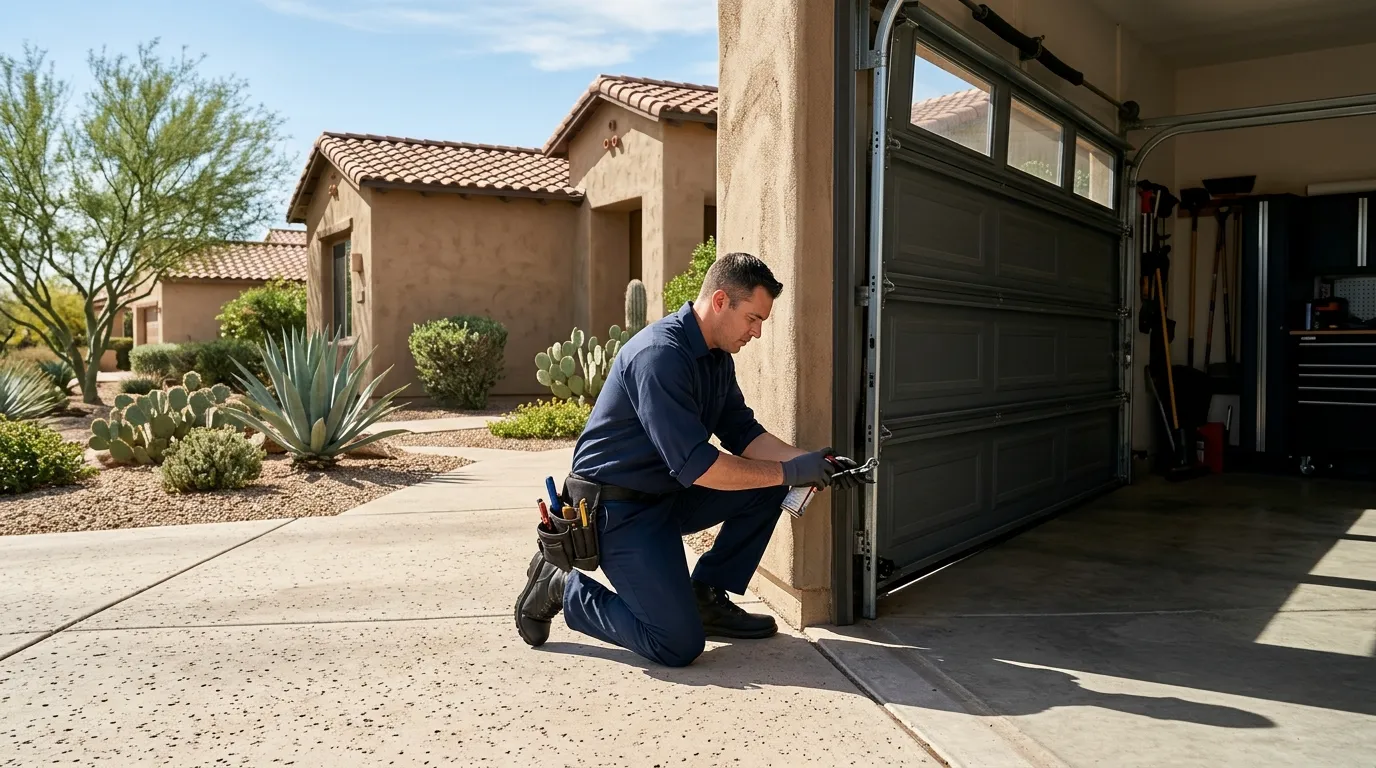
Negaunee sits seven miles from our Marquette shop, and that's the drive our truck makes every time a door call comes in from this side of the service area. Seven miles isn't far, but it's enough that we load the truck for what the call actually sounds like on the phone rather than rolling out blind - spring, cable, opener board, or a track knocked loose - because a second trip back for a part nobody grabbed the first time costs you the whole afternoon.
Most houses here went up around 1980, a decade newer than the 1971 median across the rest of the service area we cover, so the doors and openers we find failing are different animals than the ones common closer to Marquette. Instead of the original one-piece doors and older extension-spring setups we see on the older streets, Negaunee runs more sectional doors on torsion hardware from the late 70s and 80s, plus a good number of chain-drive openers from that same window that are now old enough to strip a gear or fry a circuit board without warning. The fix on a torsion break is usually the spring itself and a look at the cable drums it shares load with. The fix on an opener that quit isn't always the opener - sometimes it's the wall switch or a wire chewed at the frame.
The honest answer starts with the drive: seven miles adds real minutes to the front end of any call, and if you're stacked behind another job when yours comes in, that adds more. We don't run a branch in Negaunee, so there's no crew sitting five minutes from your driveway waiting on the phone - every job here starts with a truck leaving Marquette.
Once a tech is on site, most spring and cable jobs close out the same visit because that hardware is stock we carry on the truck. Opener boards are a different story. If the failure is a circuit board or a specific gear kit for an older chain-drive unit, that part sometimes has to be ordered, and we won't pretend otherwise - quoting a same-day fix on a part we don't have in hand is how a company loses trust fast. What we can tell you honestly is that the door gets secured - manually locked or braced - before anyone leaves, so the opening isn't sitting wide open overnight while you wait on a part.
Marquette's cold band brings the kind of hard freeze-thaw cycles that snap torsion springs at the worst possible moment, and a seven-mile drive means that moment costs you more waiting time here than it would for a job inside Marquette proper. Cold metal is brittle metal - a spring that's been flexing fine for years can let go on the one morning it's ten below, usually right as someone's trying to leave for work.
On the 1980s-era doors common in Negaunee, the other failure we see a lot is the opener's travel and force settings drifting out of adjustment as gears wear, which shows up as a door that reverses for no reason or slams the last few inches instead of easing down. That's not a spring problem and it's not usually an emergency, but it can look like one when the door won't close at all some nights. Track misalignment is the third one - panels on a 40-plus-year-old door frame have had decades to let the tracks shift a hair, and a hair is all it takes for a roller to jump the rail on a cold morning.
A torsion spring under full tension can put someone in the hospital, and that's true whether the door is five years old or forty-five. If a spring has broken and the door won't budge, the right move is to leave it down, keep the opener off, and call - not because we're trying to keep the job for ourselves, but because the tools to do that safely aren't ones most garages have lying around.
What you can reasonably check yourself: whether the wall switch has power, whether the safety sensors near the floor are aligned and their little lights are steady rather than blinking, and whether anything is visibly blocking the track. Those three things solve a surprising number of "the door won't work" calls without anyone needing a truck at all. If none of that's the issue and the door is dead or stuck, that's where we come in - this page covers what a repair call here looks like; for the fuller rundown of after-hours coverage across the whole area, see /emergency-garage-door-repair-marquette-mi.
With about 1,190 households spread through Negaunee, this isn't a market saturated with call volume, so a broken spring here doesn't get bumped by three other jobs in the same zip code the way it might in a denser part of the service area. That's not a promise of a specific arrival window - we don't have a time figure to put on this page - but it's the honest shape of what a call from here looks like on our end.
Median household income here runs $94,762, well above the wider service area's median, and it shows in how many owners here already have insulated steel doors with heavier springs rather than the older single-layer panels, which changes what parts we bring on the first trip. If you're not sure whether what you're dealing with is an emergency or something that can wait for a scheduled visit, our general Negaunee page walks through routine service and repair options at /negaunee-garage-door-repair/. For a door that's stuck open, off the track, or making a noise you don't trust, call and describe what you're seeing - that's what decides which truck comes and what's on it.
The truck comes from Marquette, about seven miles out. There's no separate branch here. That distance is built into how a call gets staged before the truck leaves, so the right parts are on board for what you describe on the phone.
Often, yes. Housing here tends to date to around 1980, roughly a decade newer than the service area's overall median, so sectional doors on torsion hardware and late-70s to 80s chain-drive openers are more common here than the older one-piece doors and extension springs seen elsewhere.
If the door is down and secured, yes - a broken torsion spring isn't going anywhere, and waiting for daylight is fine. Don't force the opener to run it in the meantime. If the door is stuck halfway or blocking a car you need, that's when it's worth calling right away.
On older units, the travel and force settings can drift as internal gears wear, which makes the door reverse without an obvious cause or come down harder than it should. It's usually an adjustment issue rather than a sign the whole opener needs replacing, but it's worth having checked before a safety sensor gets blamed unfairly.
Call now or request a free quote - same-day service on most repairs, upfront written pricing.