Marquette, MI · Garage Door Service
Doors here mostly date to the early 1970s. See what breaks first on those doors, what a same-day fix from Marquette actually involves, and how long you're without it.
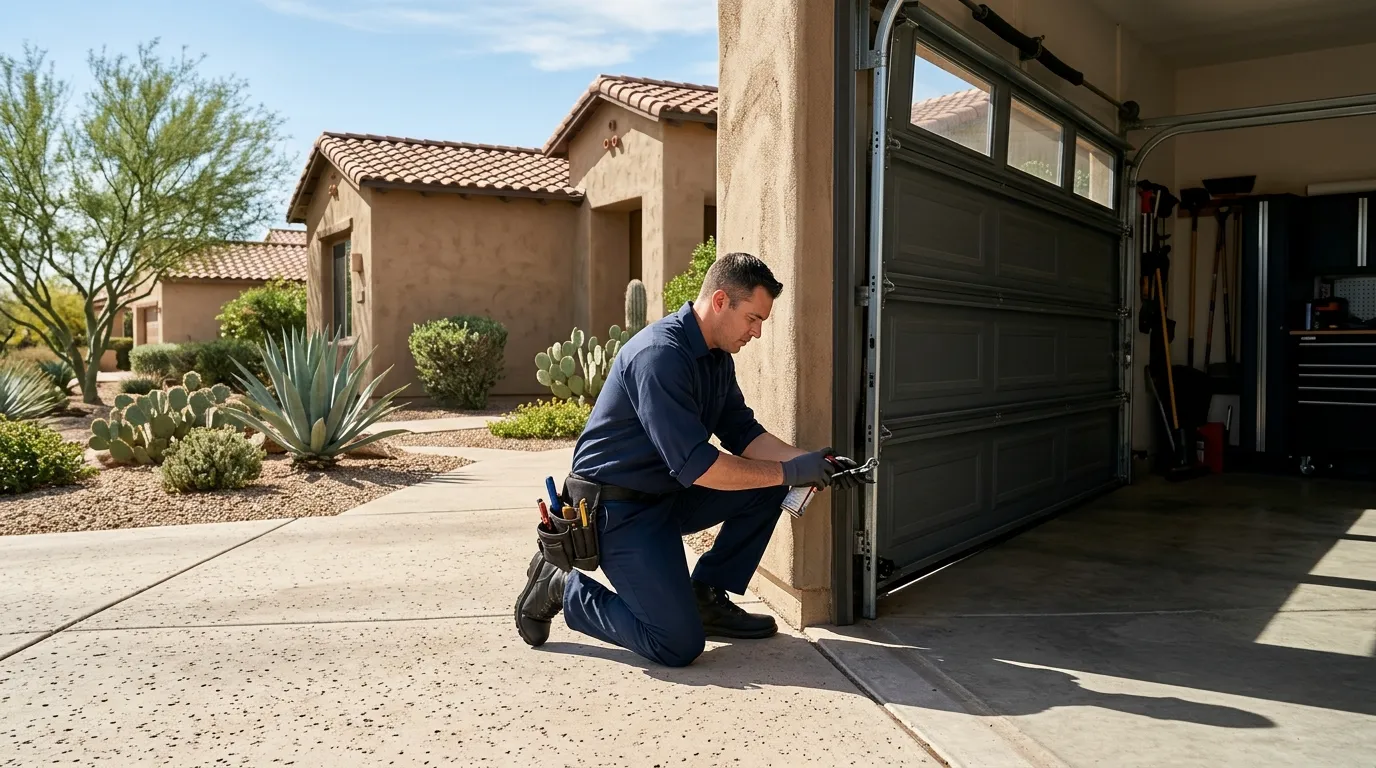
Most garage doors in West Ishpeming went up around 1971, when the area was built out with the rest of the region's 1960s-70s housing wave. That means a lot of single-layer steel doors on side-mounted extension or torsion springs, sized for the standard two-car openings of that period - not the insulated sandwich doors you'd find on anything built in the last fifteen years. Before you grab a ladder, know what you're dealing with: a door this age often has hardware that's been repainted over rust more than once, and springs that were never rated for the cold-load cycling this region puts them through. Winding a torsion spring on this vintage of bracket is not a safe first repair for a homeowner, full stop - the bracket itself may be original and metal-fatigued. If the door won't open and the opener motor is straining, that's usually a spring, not the opener. Cutting power to the opener and checking whether the door lifts by hand (with help, six inches, no more) tells you which side of that problem you're on. If it won't budge, stop pulling on it and call it in.
This service area sits in a severe cold climate band, and that changes how steel and lubricant behave over a winter. Torsion springs on 1971-era doors were wound for the loads and temperatures expected fifty years ago, and repeated hard freezes make galvanized coil springs more likely to snap outright rather than just stretch and weaken gradually. Rollers and hinges on original hardware also seize when grease thickens in deep cold, so a door that was sluggish in November can be dead in January. None of this is unique to any one house - it's a function of the housing stock's age lining up with the climate this area actually gets, across the roughly 1,060 households in West Ishpeming built to that same 1971 median. A door of this era wasn't engineered with today's cycle counts in mind, and thirty-plus winters of that mismatch is exactly why failures cluster here rather than showing up evenly across newer construction.
On doors from this build era, the short list is: a snapped torsion or extension spring, a cable that's jumped its drum after the spring let go, a bent track from a roller that seized in the cold and got forced, or a bracket working loose from decades of vibration on original screws. Panel damage is less common here than spring failure, since the steel used in the 1960s-70s runs heavier gauge than a lot of what's sold today - it dents less but it also doesn't flex, so a jammed roller tends to bend the track instead of the panel. Openers from a later retrofit sometimes mask a spring problem for a while by grinding harder against dead weight, which is worse for the motor and doesn't fix anything. One limitation worth saying plainly: if the bottom panel has already rusted through at the seam, a spring repair alone won't make that door reliable again, and replacement is the honest answer, not another patch.
A snapped spring or a jumped cable on a standard door is usually a same-visit fix once the part is on the truck - springs, cables, and rollers for this era's standard sizes are common stock, not special order. What takes longer is a bent track from a forced roller, since straightening or replacing track sections takes more time on site than a spring swap. Because the crew is coming from Marquette, roughly 16 miles out, the time-to-door-open is the drive plus the repair, not a walk-up response. There's no branch or standing crew in West Ishpeming itself, so the honest number to plan around is a scheduled visit, not an instant one. If a part turns out to be genuinely uncommon - an odd-width door from a custom install rather than the standard sizing typical of this era's construction - that one part may need to be ordered, and the door stays down longer while it comes in.
Call in what you're seeing before the visit is scheduled: whether the door lifts by hand, whether you hear a bang before it stopped working (that's usually the spring going), and whether the opener still hums or is dead silent. That helps get the right spring size and cable length on the truck instead of guessing on site. Given the drive from Marquette, a booked window works better than a walk-in expectation - this is a scheduled service call to West Ishpeming, not a dispatch from a local depot. You can see general service details on the West Ishpeming garage door repair page, and if what you're dealing with is broader than one failed part, the Marquette emergency repair page covers the wider range of what's handled from that shop.
For a broken torsion spring, the job means matching wire size and wind to the door's actual weight - not just swapping in whatever's closest, since original 1971-era doors and later replacement doors on the same house can carry different spring specs if the door itself was ever replaced. Cables get replaced alongside the spring as a matter of course, since a cable that's run its full life next to a failed spring is close behind it. A bent track gets checked for square before anything is reattached; forcing a bent section back into place without checking alignment just moves the binding point somewhere else on the door. On original hardware from this era, brackets get inspected for metal fatigue rather than assumed sound - with hardware this old, a spring fix and a five-minute bracket check go together, because springs get replaced far more often than the brackets holding them ever get looked at.
Doors in West Ishpeming date mostly from the early 1970s, and this area sits in a severe cold climate band. Torsion and extension springs from that era weren't rated for the cycling that repeated hard freezes put on steel, so cold snaps are when fatigued springs finally give out rather than just stretching further.
There's no local depot in West Ishpeming - the crew comes from Marquette, about 16 miles away. The time to get your door open is the drive plus the repair time, so booking a visit rather than expecting a walk-up response is the realistic plan.
Depends what's failed. A snapped spring or bent track on original hardware is usually a straightforward repair since the parts are common stock. But if the bottom panel has rusted through at the seam, no spring fix makes that door reliable again - replacement is the honest call at that point.
Not recommended on hardware this old. Original brackets from 1971-era doors have decades of vibration and rust behind them, and winding a spring against a fatigued bracket is a real injury risk. Cut power to the opener and leave the spring alone until it's looked at.
Call now or request a free quote - same-day service on most repairs, upfront written pricing.