Marquette, MI · Garage Door Service
Serving Ishpeming from Marquette, 15 miles out. We know the 1970s door hardware common on this side of town and the cold-climate strain it takes each winter.
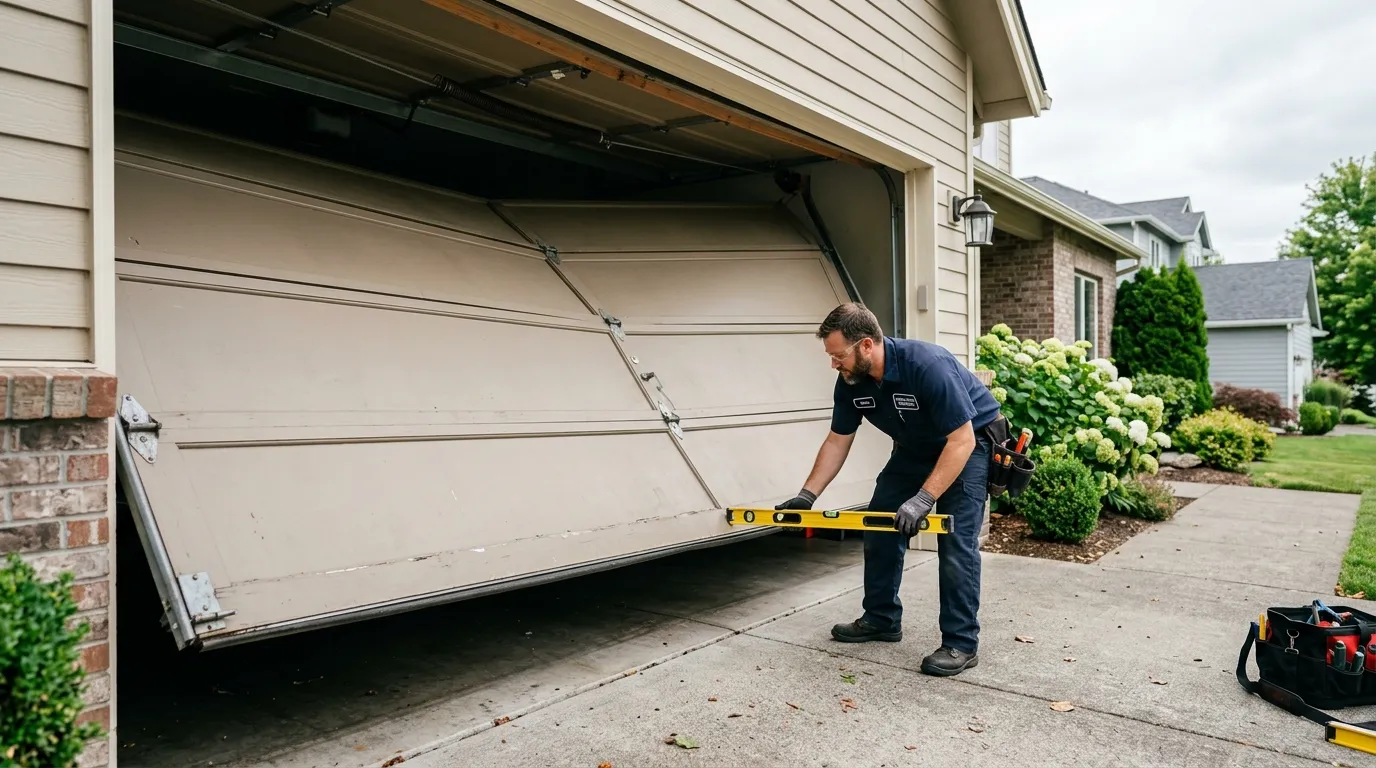
We run out of Marquette, and Ishpeming sits about 15 miles out, so we're not sitting on your street waiting for a call. That's the honest limitation: we don't keep a truck parked in Ishpeming, and if you need someone inside the hour on a Tuesday morning, we're probably not it. What we do bring is a truck stocked for the kind of doors this town actually has, because we've priced parts for them before we ever pull up. If your spring lets go on a Saturday, call ahead and we'll tell you straight where we are in the route rather than guess a window we can't hold. Ishpeming is close enough that a same-day trip is realistic most of the week, it's just not a promise we make blind. We'd rather tell you the truck is 40 minutes out than tell you 10 and be wrong.
The typical Ishpeming house dates to around 1973, which puts it a couple years past the median for the wider Marquette service area (1971) but squarely in the same building era - 1941 through 1988 covers most of what's out there. That matters more than it sounds like it should. A house built in '73 was framed for a garage door built in '73: single-layer steel, no insulation, an opener bracket sized for a lighter panel than what gets sold today. Ishpeming's roughly 1,343 households, and the ones in owner-occupied houses from that era are the calls we get most - not because the doors are broken constantly, but because the parts that were standard then aren't standard now. Median household income here runs about $79,485, above the wider service area's $68,262, and we mention it only because it tends to mean owners replace worn hardware before it fails outright rather than waiting on a full breakdown. That changes the kind of job we show up to.
A door hung in the early '70s almost always runs on a torsion spring sized for a lighter, uninsulated panel, mounted on hardware that predates the double-loop end bearing plates common today. When an owner swaps in a heavier insulated door - a reasonable upgrade against the cold - without upsizing the spring, the opener starts straining on every cycle, even though the door looks fine. That's the single most common fault we find on Ishpeming calls: a mismatch between an older frame and newer, heavier steel. This region sits in a severe cold climate band, and steel doors that age get brittle at the bottom seal and the corner brackets first, usually showing as a gap at the floor before anything visibly cracks. We won't push a full replacement on a door where the track and spring are still sound - sometimes it's a seal and a lube job, not a new unit. But once the panel itself is warping from decades of freeze-thaw at the bottom rail, patching it is money spent twice.
Ishpeming's older sections carry the 1970s stock we've described, but the area sits among a handful of nearby communities - Trowbridge Park 2 miles WNW, Harvey 5 miles out, Negaunee at both 7 and 10 miles - and newer construction pockets closer to Ishpeming itself don't share the same hardware problems. A garage built in the last fifteen years usually has a properly sized spring and an insulated door from the start, so the failure pattern shifts: openers with worn logic boards, rollers that need replacing before the spring ever does. We treat those as different jobs, because they are. Knowing which decade built your street tells us what's likely wrong before we open the garage, which saves you a diagnostic charge on a straightforward call. It's also why we ask your build year on the phone instead of just your address - two houses three streets apart in Ishpeming can be twenty years apart in construction.
No. We run out of Marquette, about 15 miles away, and drive out for calls. We're upfront about that because it affects how fast we can get to you compared to a company physically based in town.
Steel doors from that era were built without insulation and sized for lighter springs. In a severe cold climate, the seals and corner brackets get brittle first, and if the door's ever been swapped for a heavier insulated panel without an upsized spring, the opener works harder every cycle.
If the track, bearing plates, and panel are sound, a spring swap is usually the right call. Once the bottom rail is warping from repeated freeze-thaw, you're patching a door that's already failing structurally, and that's when replacement makes more sense.
Call now or request a free quote - same-day service on most repairs, upfront written pricing.