Marquette, MI · Garage Door Service
Marquette Garage Door Pros repairs broken springs, openers, and tracks on the cold-climate torsion hardware common in Marquette's 1960s-70s housing stock.
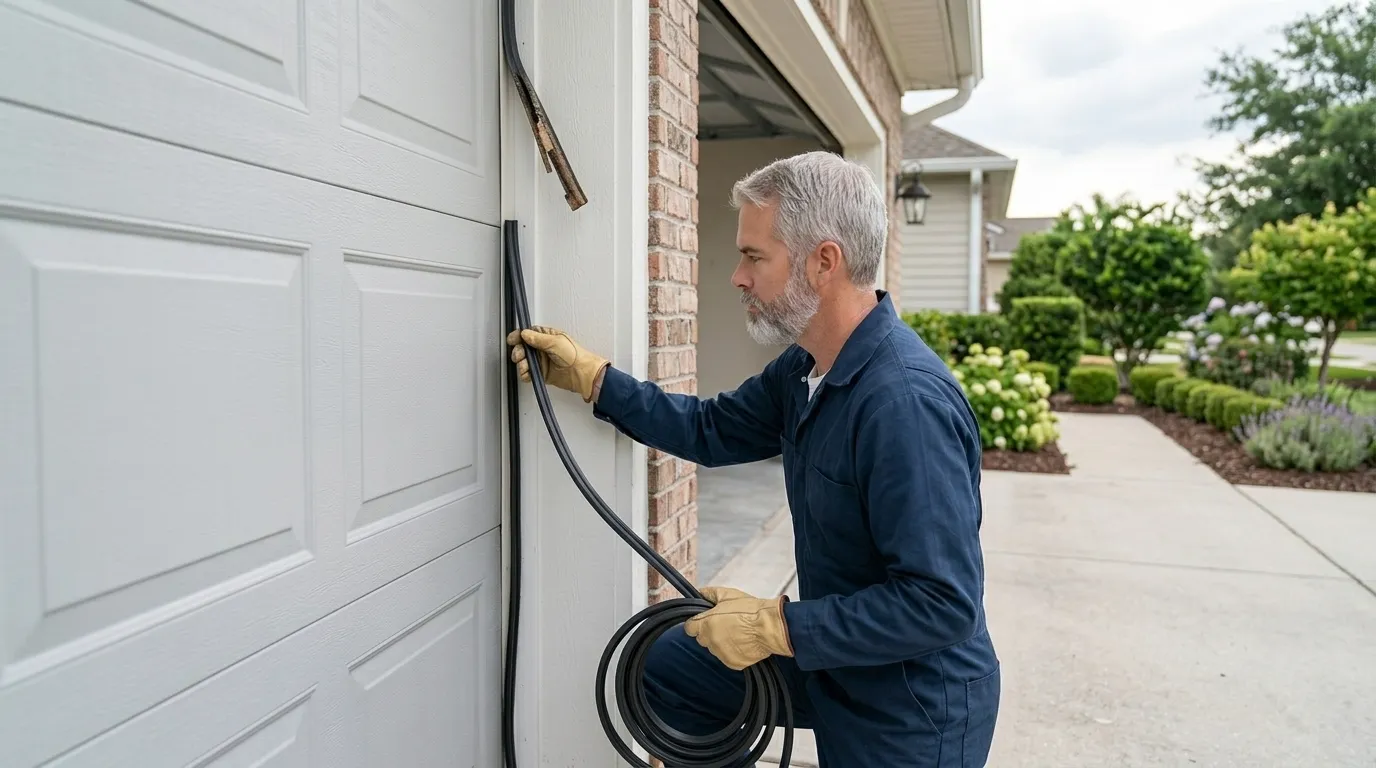
A garage door repair call in Marquette usually comes down to one of four things: a broken torsion spring, a cable that's jumped or frayed, rollers that have worn enough to bind in the track, or an opener that's straining against hardware it was never sized for. We pull the door panel by panel if we need to, check spring tension against the door weight, and swap worn rollers and cables before they take a track bracket with them. On steel doors from the 1960s and 70s that are still running their original torsion spring, the fix often means upsizing the spring to match a door that's been repainted, re-insulated, or fitted with a heavier opener since it was built - the original hardware wasn't spec'd for that. We also true up tracks that have pulled away from the framing, which happens more here than in milder places because the wood framing itself moves with the frost. A repair isn't always a spring swap. Sometimes it's a bent track from a car bumping it, or a sensor that's failed and won't let the door close. We diagnose before we quote, and we tell you straight when a repair is cheaper than we expected or when it isn't worth doing at all.
The most common call is a door that won't move - you hit the wall button and the opener hums but the door doesn't budge, which usually means the torsion spring let go and the opener is trying to lift the full weight of the door alone. Sometimes it's less dramatic: the door is slower than it used to be, or it shudders partway up and stalls. A loud bang from the garage, often first thing on a cold morning, is almost always a spring snapping under tension. Doors that run off-track tend to show it as a visible gap between the bottom panel and the frame on one side, or a grinding sound as a roller fights a bent section of track. If the opener is straining - motor running longer than it should, or reversing partway through a close - that's usually the hardware telling you it's compensating for something else, not an opener problem on its own. None of these show up out of nowhere. They're the end point of hardware that's been working a little harder every winter for years, and by the time you hear the bang, the spring has usually been losing tension for months.
Most of the housing here went up between 1941 and 1988, with the median build year landing around 1971, and across the ten areas we work in that stock leans heavily toward 1960s and 70s construction. That matters because torsion springs are rated for a set number of open-close cycles, and a spring installed when a house was built in 1968 has had over half a century to work through that count - most are well past it. Marquette sits in a cold-severe climate band, and steel contracts as it gets cold, which tightens tolerances in a torsion spring that's already fatigued and makes the last few percent of its rated life go a lot faster than the first. That's why the failure clusters in the coldest stretch of the year: it's not the cold breaking a healthy spring, it's the cold finishing off one that was already near the end. With 8,020 owner-occupied houses across the service area, a large share of what we see is original hardware on houses built well before anyone specified insulated panels or heavier opener motors, which puts extra load on springs sized for a lighter, older door.
Lubricating hinges and rollers, tightening loose bolts on the track brackets, and clearing the photo-eye sensors are all fine to do yourself, and they'll extend the life of hardware that's still healthy. Torsion spring replacement is not a DIY job - the spring is under enough tension to cause a serious injury if it releases while you're working on it, and that's true whether the door is five years old or fifty. At a median household income of $68,262, most homeowners here are weighing a spring repair against a full door replacement rather than against doing it themselves, and that's the right comparison to make. Our honest limitation: if your door is original to a house built in the 1960s or earlier and the track, rollers, and panel are all showing wear alongside the spring, replacing just the spring is sometimes a short-term fix that gets you another year or two, not a long-term one. We'll tell you which situation you're in before we quote, so you're not paying for a repair that's really just delaying a replacement.
Torsion springs wear out with use, and cold steel has less give than warm steel, so a spring that's already near the end of its rated cycle count tends to fail once temperatures drop. Marquette's cold-severe climate makes this pattern common - the cold isn't causing the failure on its own, it's finishing off a spring that was already worn.
If your house was built during Marquette's main construction era of 1941 through 1988, there's a real chance the torsion spring and track are original or close to it, especially in the 1960s and 70s-built homes that make up a large share of the local stock. We check the hardware date and cycle wear before quoting any repair.
We don't recommend it. A torsion spring holds enough stored tension to cause serious injury if it lets go while you're working on it. Lubrication, bolt tightening, and sensor cleaning are safe to handle yourself; spring and cable work is not.
If the opener motor runs but the door doesn't move, or moves slower than normal and the motor sounds like it's straining, that's almost always a spring problem, not an opener problem. The opener is just trying to lift weight it was never meant to carry alone.
Call now or request a free quote - same-day service on most repairs, upfront written pricing.