Marquette, MI · Garage Door Service
Marquette homes built mostly 1941-1988 run original torsion hardware into severe cold. Here's what fails, why, and when a repair actually holds up.
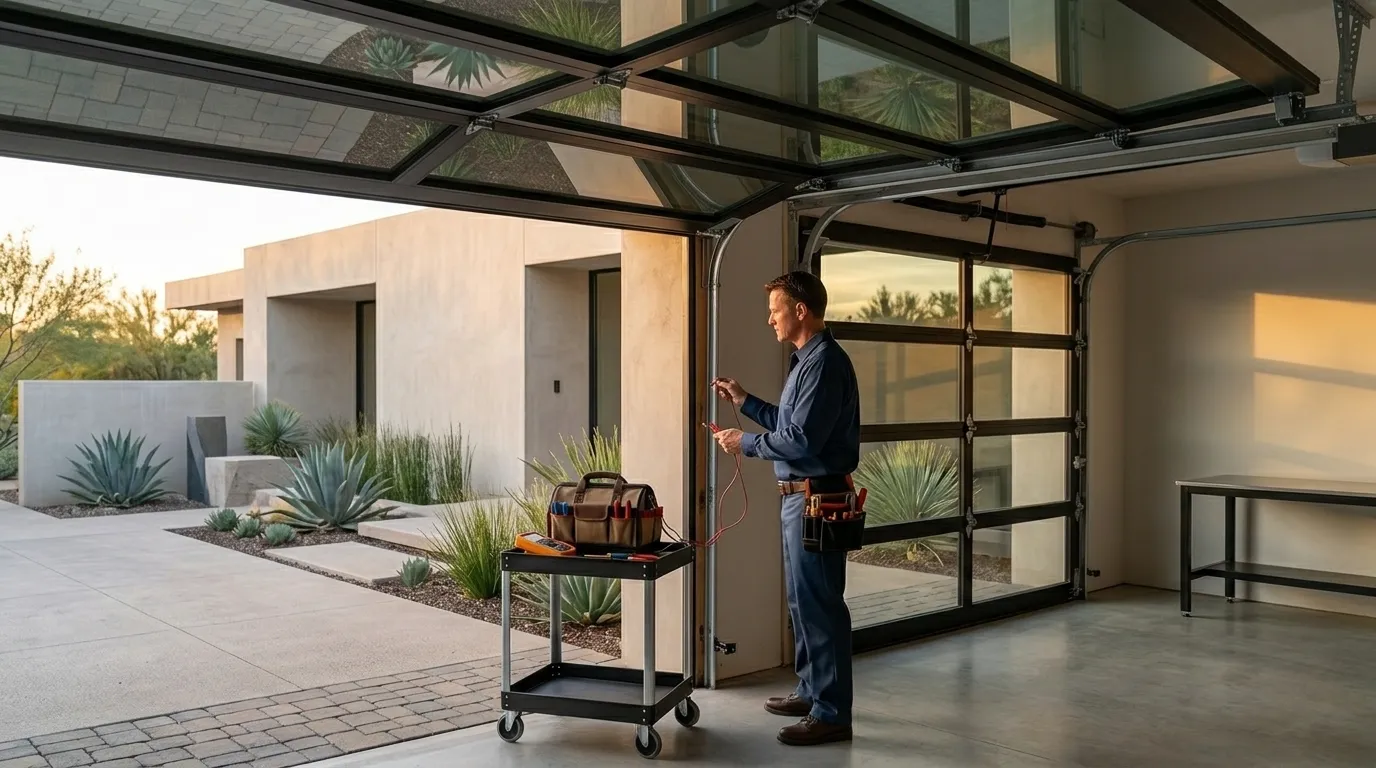
Most calls we run in Marquette start the same way: a torsion spring has let go, or it's close enough that the door won't lift without help. The fix is a full spring swap on the header above the door, matched to the door's weight and wound to the right cycle count for the drums it's paired with. We check the cables at the same time - a spring failure under load will often fray or snap a cable on its way down, and replacing one without the other just means a second call in a few months.
We also inspect the bearing plates and center bracket, since original 1960s and 70s hardware on these doors was built with steel that doesn't hold up the same way modern galvanized parts do. If the drums show wear grooves or the shaft is bent, we replace those pieces rather than reuse them under a new spring - a new spring on a worn shaft is a short-term patch, not a fix.
We don't recommend re-tensioning an old spring or adding a second spring to "help" a failing one. Once the coil has fatigued, it's done, and doubling up just shifts the load unevenly across the shaft.
The door feels heavy before it fails outright - that's usually the first sign. You notice it when the opener strains, or when you lift the door manually and it doesn't hold halfway like it should. A loud bang from the garage, especially on a cold morning, is almost always the spring letting go under tension.
Sometimes it's quieter: the door closes crooked, one side dropping faster than the other, which points to a spring on one side already gone while the other is still holding partial load. If you see a visible gap in the coil when you look up at the spring above the door, that's confirmation, not a maybe.
On newer hardware this tends to happen gradually with warning creaks. On the original torsion setups still running in a lot of Marquette garages, it's often sudden - the metal fatigues quietly for years and then just stops working with no ramp-up.
Marquette's housing stock across the service area was mostly built between 1941 and 1988, with a median build year around 1971, and the ten areas we cover - Trowbridge Park, Harvey, Negaunee, Richmond, West Branch, Ishpeming, West Ishpeming, and Gwinn among them - share that same 1960s-70s construction wave. That means a lot of original torsion springs are running decades past the cycle life they were built for.
Add Marquette's climate band, which sits in the severe cold category, and you get a harder failure pattern than the same hardware would see somewhere temperate. Steel contracts in deep cold, lubricant thickens or gets stripped by condensation cycles, and a spring that's already fatigued from age gets one more stress it wasn't designed to absorb. That's why so many of our winter calls are springs that were fine in October and gone by January - the cold doesn't cause the wear, it just finishes what forty or fifty years of cycling already started.
A torsion spring is under enough stored tension to cause real injury if it lets go while you're working on it, and that's true whether the door is five years old or fifty. We don't recommend homeowners handle spring replacement themselves - it's one of the few jobs in this trade where the honest answer is "call someone," not "here's how."
What you can check yourself: whether the door is visibly crooked, whether there's a gap in the spring coil, and whether the opener is straining on doors that used to move quietly. That's useful information to have ready when you call, and it helps us bring the right spring on the first trip instead of a second visit.
With 8,020 owner-occupied houses among the 11,981 households in this area, and a median household income of $68,262, we hear from a lot of owners weighing repair against replacement. If the door itself - panels, track, hardware - is still sound, a spring and cable job is usually the cheaper call. If the door is original from the same era as the house, replacement sometimes makes more sense than repairing something that's going to need the next part in a year anyway.
Disconnect the opener and try lifting the door by hand. If it's heavy, won't hold halfway, or drops on its own, the spring has failed or is close to it. If the door lifts fine by hand but the opener won't engage, that's a separate opener issue, not a spring problem.
Marquette sits in a severe cold climate band, and cold steel is less forgiving of a spring that's already fatigued from age. A lot of the springs we replace in January were already worn from decades of cycling - the cold is what finally finishes them off, not what caused the wear.
Usually yes, if the panels and track are still solid. A lot of Marquette homes have doors from the same 1960s-70s era as the house, and if the hardware is sound apart from the spring, a repair holds up fine. If the drums or shaft are worn too, we'll tell you rather than patch around it.
No. Once a torsion spring has fatigued, adding a second one just spreads uneven load across the shaft and doesn't fix the underlying wear. The right move is replacing the worn spring outright, matched to the door's weight.
Call now or request a free quote - same-day service on most repairs, upfront written pricing.